

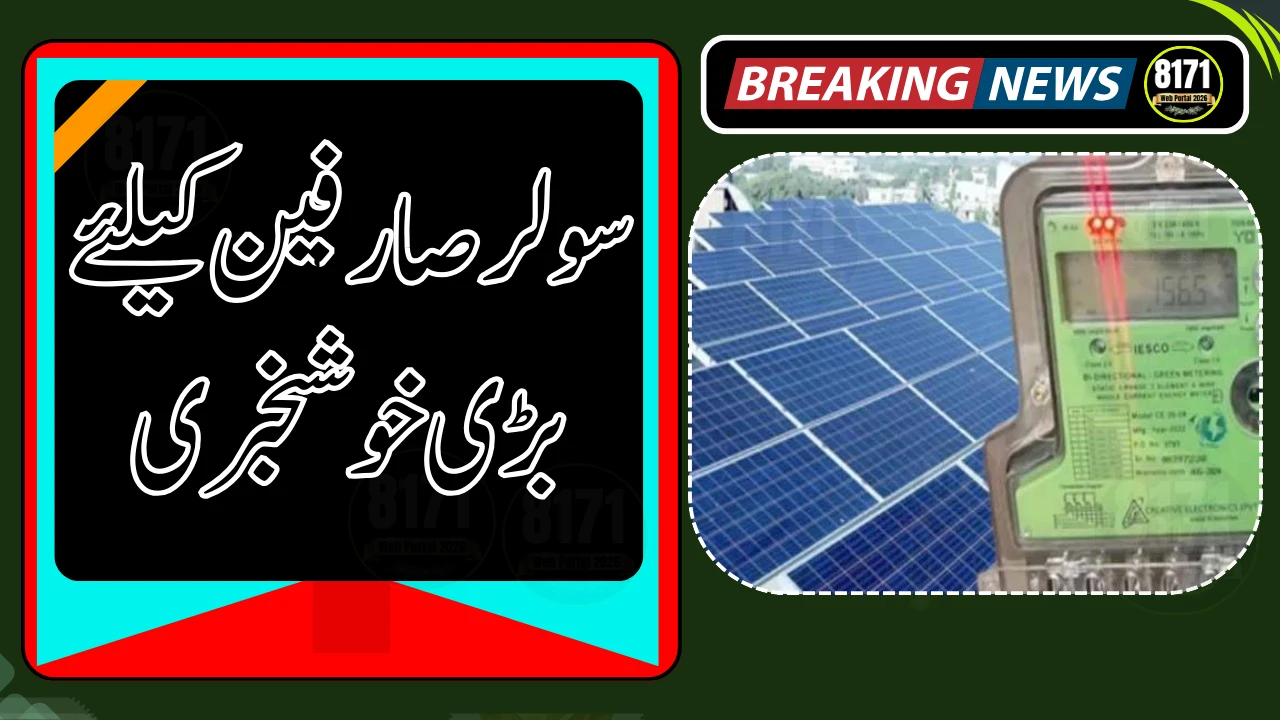
In a major development for solar users across Pakistan, the National Electric Power Regulatory Authority (NEPRA) has decided to retain the existing net metering policy for current solar consumers.
This announcement comes after uncertainty created by earlier notifications regarding changes to the country’s solar energy framework.

For thousands of households and businesses using rooftop solar systems, this decision provides much-needed clarity and relief.
What Has NEPRA Announced?
NEPRA has issued a notification regarding amendments to solar consumer regulations and has invited public feedback within 30 days.
According to the draft amendments:
-
The revised rules will be effective from February 9, 2026
-
Existing solar consumers will continue under the current net metering framework
-
New regulations will apply differently to future applicants
This means current solar users will not immediately lose the benefits they were previously receiving.
What Was the Earlier Controversy?
Last week, NEPRA had issued a notification indicating:
-
Net metering would be replaced with a net billing system
-
Extra electricity from new solar users would be purchased at Rs 11 per unit
-
Contract duration for new solar consumers would be reduced from 7 years to 5 years
-
Unit-for-unit adjustment facility would be removed
These changes created concerns among existing and potential solar investors.
Net Metering vs Net Billing – What’s the Difference?
Under Net Metering:
-
Consumers export surplus electricity to the grid
-
Units exported are adjusted against imported units
-
Bill adjustments are done on a unit-to-unit basis
Under Net Billing:
-
Exported electricity is purchased at a fixed rate
-
Consumers buy electricity at regular tariff
-
No direct unit adjustment system
The shift from net metering to net billing can significantly impact long-term savings for solar users.
What This Means for Existing Solar Users
For current solar consumers:
-
Existing agreements remain protected
-
Unit adjustment benefits continue
-
Financial planning remains stable
This is particularly important for households and small businesses that invested heavily in rooftop solar systems expecting long-term savings.
What About New Solar Applicants?
The amended regulations indicate:
-
New applicants may fall under updated terms
-
Exported electricity may be purchased at Rs 11 per unit
-
Contract duration reduced to 5 years
This could affect return-on-investment calculations for future solar installations.
Why Is NEPRA Reviewing the Policy?
Officials argue that rapid growth in rooftop solar installations has:
-
Increased pressure on distribution companies
-
Affected revenue models
-
Created tariff imbalances
The regulatory authority aims to balance:
-
Consumer benefits
-
Grid sustainability
-
Financial stability of power companies
Public consultation within 30 days will help shape the final decision.
Should Solar Investors Be Concerned?
For existing consumers, there is immediate relief.
For new investors, it is important to:
-
Review updated regulations carefully
-
Calculate ROI under the new Rs 11 per unit buyback rate
-
Stay updated on final notification after consultation period
Solar remains a strong long-term energy solution in Pakistan due to rising grid tariffs and frequent power issues.